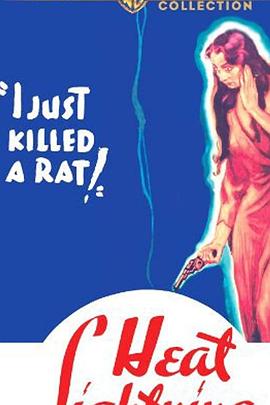
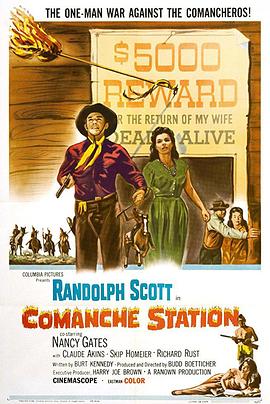
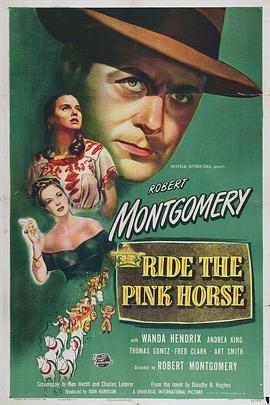
In the Mohave Desert, Olga runs a gas station, lunch counter, and auto camp with her younger sister Myra. In a 24-hour period, Olga must deal with Myra's desire to go to a town dance with a cad, the appearance by happenstance of George, an old boyfriend whose conduct is never above suspicion, and the overnight presence of two women recently divorced in Reno, who, with a chauffeur, are carrying valuable jewels. George gets wind of the jewels and plays with Olga's heartstrings to set up a robbery. Myra arranges to sneak off with her beau. It's hot, and the heat lightening is crackling on the horizon. Is Olga's life of peace and hard work in the desert about to change for the worse
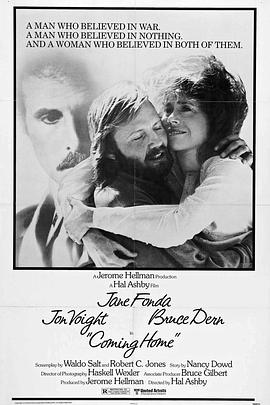
战争结束了,但留下的悲剧从来都不会就此断绝。在位于美国加州的一家伤兵医院里,卢克(强·沃特 Jon Voight 饰)痛苦的躺在病床上。战争彻底的夺走了他剩余人生里的幸福和自由,半身不遂的他注定再也享受不到生为一个正常人的快乐了。因为种种,卢克每天都生活在抑郁和愤怒之中。 莎莉(简·方达 Jane Fonda 饰)的丈夫鲍勃(布鲁斯·邓恩 Bruce Dern 饰)是一名军官。身为军官之妻,莎莉有义务对在战争中遭难的军人们进行安抚。就这样,莎莉邂逅了卢克,并且在时间的推移之中深深的爱上了他。为了给予卢克继续活下去的希望,她不惜用自己的身体去引诱卢克。
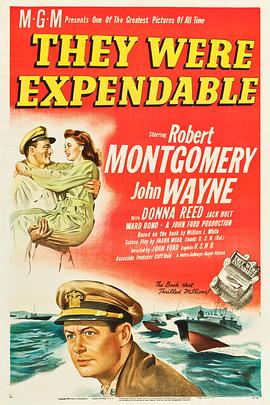
In the aftermath of the Japanese attack on Pearl Harbor, the members of a PT boat squadron patrol Philippine waters and attack Japanese ships. The PT boat initially had little respect from senior Navy officers but their maneuverability and speed however quickly change their minds. As the Japanese advance across the Philippines, the PT boats become essential in evacuating the se...
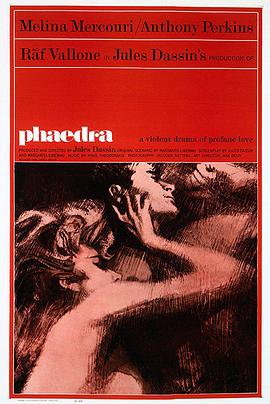
A retelling of the Greek myth of Phaedra. In modern Greece, Alexis's father, an extremely wealthy shipping magnate, marries the younger, fiery Phaedra. When Alexis meets his stepmother, sparks fly and the two begin an affair. What will the Fates bring this family Alexis's roadster and the music of Bach figure in the conclusion.
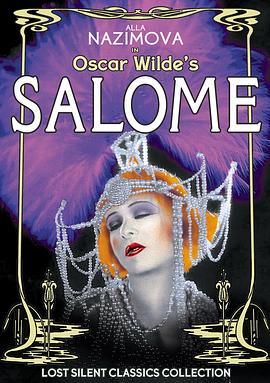
Salomé (1923), a silent film directed by Charles Bryant and starring Alla Nazimova, is a film adaptation of the Oscar Wilde play of the same name. The play itself is a loose retelling of the biblical story of King Herod and his execution of John the Baptist (here, as in Wilde's play, called Jokaanan) at the request of his stepdaughter, Salomé, whom he lusts after. Salomé is often called one of the first art films to be made in the U.S.[citation needed] The highly stylized costumes, exaggerated acting (even for the period), minimal sets, and absence of all but the most necessary props make for a screen image much more focused on atmosphere and on conveying a sense of the characters' individual heightened desires than on conventional plot development. Despite the film being only a little over an hour in length and having no real action to speak of, it cost over $350,000 to make. All the sets were constructed indoors to be able to have complete control over the lighting. The film was shot completely in black and white, matching the illustrations done by Aubrey Beardsley in the printed edition of Wilde's play. The costumes, designed by Natacha Rambova, used material only from Maison Lewis of Paris, such as the real silver lamé loincloths worn by the guards. No major studio would be associated with the film, and it was years after its completion before it was released, by a minor independent distributor. It was a complete failure at the time and marked the end of Nazimova's producing career. A longstanding rumor, which seems to have started while the film was still in production, suggests that its cast is comprised entirely of gay and bisexual actors in an homage to Oscar Wilde, as per star and producer Nazimova's demand. It is, of course, impossible to say, but one of the extras in Salomé reported that a number of the cast members—both featured and extras—were indeed gay, but not an unusual percentage of them, and certainly not all of them. What can be said is that Nazimova herself was a lesbian, the two guard characters (who, next to Salomé, have the most screen time) are at least played very stereotypically gay, and several of the female courtiers are men in drag. Salomé was screened in 1989 at the New York International Festival of Lesbian and Gay films and in 1990 at the New York Gay Experimental Film Festival. In 2000, the United States Library of Congress deemed the film culturally significant and selected it for preservation in the National Film Registry.
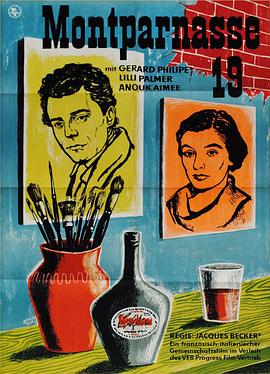
The last year of life of the Italian-French painter Amedeo Modigliani (1884-1920) who died with 36 years, was played by Gérard Philipe, who was lethally sick during the shooting of this movie and died shortly after its release, 1959, with 36 years - on one of the two diseases that Modigliano had himself and exactly in his age. Further, this movie was directed by Jacques Becker - after the sudden death of Max Ophüls. Becker, too, died only 2 years after this movie.
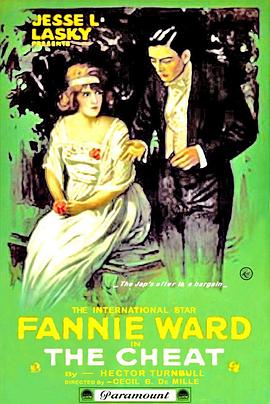
Edith Hardy uses charity funds for Wall Street investments in hopes of buying some new gowns. She loses all the money and borrows from wealthy oriental Tori. When her husband gives her the amount she borrowed, Tori won't take it back, branding her shoulder with a Japanese sign of his ownership. She shoots him. Her husband takes the blame. In court Edith reveals all to an angry mob. Written by Ed Stephan {stephan@cc.wwu.edu} Richard Hardy, a hardworking stockbroker, labors overtime to keep up with the ruinous bills incurred by his beautiful but irresponsible wife Edith, a venal, spoiled socialite who is impervious to his pleas for fiscal restraint. Acting on what she believes to be an insider information, she impulsively embezzles $10,000 from the Red Cross charity she chairs for a stock tip. When she finds the money has been lost, she desperately turns to a Japanese ivory trader with whom she has been thoughtlessly flirting and persuades him to replace the money in exchange for an assignation. When her husband's long-awaited business deal finally materializes, she desperately tries to withdraw from their agreement by replacing the money. Angered and disappointed with her resistance to his advances, he uses a branding device to mark her shoulder as his property. Feeling violated, Edith shoots him in the shoulder and leaves. In order to protect his wife's reputation, Richard confesses to the crime and faces trial for attempted murder. Written by Gabe Taverney (duke1029@aol.com)
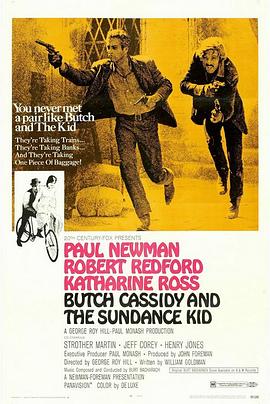
19世纪末,威名四震的“虎豹小霸王”布奇(保罗·纽曼 Paul Newman 饰)与搭档太阳舞小子(罗伯特·雷德福 Robert Redford 饰)在美国西部的一个小镇上四处抢劫银行,与对手凶残搏杀,与警察机智周旋。一次,两人抢劫“飞人”公司邮车,引来警长与当地居民的追捕。但他俩依旧我行我素,与女教师埃塔(凯瑟琳·罗斯 Katharine Ross 饰)逍遥自在地过着快乐时光。当他们再次抢劫“飞人”邮车后,招来一队骑警,对他们紧追不舍,展开天罗地网的搜捕,迫使布奇和太阳舞小子展开了逃亡之路。从悬崖跳下逃命的两人找到埃塔,商议去玻利维亚谋生。在异国他乡,他们尝试金盆洗手走上正道,终究还是认为这种生活不适合他们,于是重操旧业。埃塔一气之下,抛下他们重回美国。他们在一座小镇不慎暴露身份,被追捕的警察重重包围。前有拦截,后有追兵,虎豹小霸王是否能够在重重夹击之下浴火重生? 本片获得第42届奥斯卡最佳原创剧本奖、最佳摄影奖、最佳原创歌曲奖、最佳配乐奖等
Straub-Huillet’s adaptation of Heinrich B?ll’s biting satire Bonn Diary presents the reflections of a reactivated officer who is summon ed to the West German capital by the Ministry of Defense to establish an Academy for Military Memories. Straub considered his film to be an intervention against German rearmament in the Adenauer era: "Machorka-Muff is the story of a rape, the r...
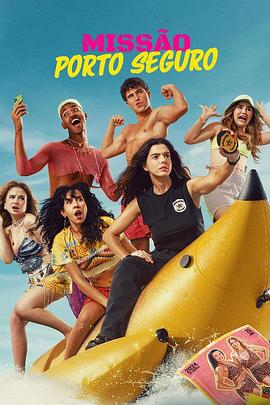
In order to get evidence for her case and dismantle a criminal organization, an uptight undercover cop crashes a high school graduation trip to a party-heavy beach in Brazil.
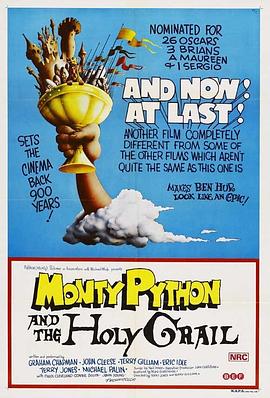
带着敲椰子壳的仆人,亚瑟王(格雷厄姆·查普曼 Graham Chapman 饰)假装骑着马寻找骑士和城堡,一路看尽民不聊生的景象,和各种鸡同鸭讲的民众交流,最后招揽到一群圆桌骑士。他们一起假装骑着马,到了卡米洛特城堡,在城堡外,他们遇见天上浮现的上帝,要求他们去寻找圣杯。他们试图用“木獾记”攻陷一座法国人的城堡,但是却忘记藏身在木獾里,最终被法国人打得落花流水。经历失败的亚瑟王与骑士们开始分头行动,寻找圣杯的任务意义重大,更多不靠谱的人和事一路等待这群不靠谱的骑士们…… 本片是唯一一部进入IMDB前50排名的“无厘头”电影。片中“巨蟒团”六名核心成员每人出演了4-10个角色,包揽片中大部分角色。
Pic watches as divorcee Xan (Desiree Staples) gathers her close friends to celebrate her impending split, only to reveal she intends to burn her divorce settlement money to start fresh. Chaos ensues as each friend has a wildly different opinion on what Xan should do.
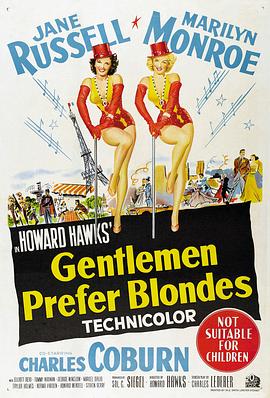
罗丽拉(玛丽莲·梦露 Marilyn Monroe 饰)和桃乐西(简·拉塞尔 Jane Russell 饰)是舞台上的好搭档,生活中的好伙伴。艳光四射的两人走在一起,吸引了无数男人的目光,然而,她们并非空有一副好皮囊,论智商,罗丽拉和桃乐西可不输给任何人。 某日,罗丽拉登上了驶往法国的轮船,前去和情人艾仕文(埃利奥特·里德 Elliott Reid 饰)结婚,在船上,两人遇见了一名为古斯(托米·努南 Tommy Noonan 饰)的男子。原来,古斯是艾仕文父亲派来的私家侦探,为的是考验罗丽拉对自己儿子的真心。随着时间的推移,桃乐西竟然慢慢爱上了善良的古斯,但罗丽拉很显然帮自己的好闺蜜相中了另一位“金龟婿”。
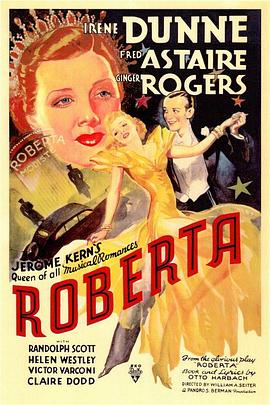
John Kent (Randolph Scott), a former star football player at Harvard, goes to Paris with his friend Huck Haines (Fred Astaire) and the latter's dance band, the Wabash Indianians. Alexander Voyda (Luis Alberni) has booked the band, but refuses to let them play when he finds the musicians are not the Indians he expected, but merely from Indiana (Huck Haines and his Indianians Band). John turns to the only person he knows in Paris for help, his Aunt Minnie (Helen Westley), who owns the fashionable Roberta gown shop. While there, he meets her chief assistant (and secretly the head designer), Stephanie (Irene Dunne). John is quickly smitten with her. Meanwhile, Huck unexpectedly stumbles upon someone he knows very well. Countess Scharwenka, a temperamental customer at Roberta's, turns out to be his hometown sweetheart Lizzie Gatz (Ginger Rogers). She gets Huck's band an engagement at the nightclub where she is a featured entertainer. Two things trouble John. One is Ladislaw (Victor Varconi), the handsome Russian deposed prince and doorman who seems too interested in Stephanie. The other is the memory of Sophie (Claire Dodd), the snobbish, conceited girlfriend he left behind after a quarrel over his lack of sophistication and polish. When Aunt Minnie dies unexpectedly without leaving a will, John inherits the shop. Knowing nothing about women's fashion and that his aunt intended for Stephanie to inherit the business, he persuades Stephanie to remain as his partner. Correspondents flock to hear what a football player has to say about feminine fashions. Huck gives the answers, making a lot of weird statements about the innovations John is planning to introduce. Sophie arrives in Paris, attracted by John's good fortune. She enters the shop, looking for a dress, but is dissatisfied with everything Stephanie shows her. Huck persuades her to choose a gown that John had ordered discarded as too vulgar. When John sees her in it, they quarrel for the final time. John reproaches Stephanie for selling Sophie the gown. Terribly hurt, Stephanie quits the shop. With Roberta's putting on a fashion show in a week, Huck takes over the design work, with predictably bad results. When Stephanie sees his awful creations, she is persuaded to return to save Roberta's reputation. The show is a triumph, helped by the entertaining of Huck, Countess Scharwenka, and the band. (A pre-stardom Lucille Ball, with platinum blond hair, appears uncredited in her first RKO film[4] as a model wearing an elaborate feather cape, after the vocal by Dunne, in the fashion show.[5]) The closing sensation is a gown modeled by Stephanie herself. At the show, John overhears that she and Ladislaw are leaving Paris and mistakenly assumes that they have married. Later, he congratulates her for becoming a princess. When she informs him that Ladislaw is merely her cousin and that the title has been hers since birth, the lovers are reunited. Huck and Lizzie, who decide to get married, do a final tap dance sequel.